
 EN
NBA Betting Explained: Moneyline, Spread, Totals and Player Props
Updated

Three things to understand
- A spread bet is about the margin, not just the winner.
- American odds show profit on 100 units for positive prices and the stake needed for 100 profit for negative ones.
- Player props depend on participation and statistical-source rules.
Basketball markets are built on points, margins and minutes, so the rules that govern them are specific. This guide explains moneylines, spreads, totals and player props, shows how American odds convert into profit and probability, and lists the settlement details worth checking.
What are moneyline and spread bets?
A moneyline bet picks which team wins the game. A spread bet applies a handicap to the final score: if a team is listed at -5.5, it must win by six points or more for the bet to win. The team listed at +5.5 wins the bet if it wins the game or loses by five or fewer.
Half-point lines remove the possibility of a push. Whole-number lines can produce one, which usually returns the stake.
How do American odds work?
A negative price shows how much you must stake to win 100. At -150, you stake 150 to win 100, which implies about a 60% chance before margin. A positive price shows the profit on a 100 stake: at +180, you win 180 on 100, implying roughly 35.7%.
These are format examples, not current prices. Convert any price to a probability before you compare it with your own view.
How do totals and player props work?
A total, or over/under, compares the combined score of both teams with a stated line. Player props use individual statistics such as points, rebounds or assists, or combinations of them.
Check participation requirements and which source decides the statistics. A player who leaves early or does not play can lead to a void or a loss depending on the rule.
Is overtime included?
NBA regulation is four 12-minute quarters, and a tie is settled by five-minute overtime periods. Many NBA markets include overtime, but that must be confirmed in the listing.
Do not assume it from the competition name. A spread or total can look close at the end of regulation and finish very differently after extra periods.
What should you know about parlays and live markets?
A parlay links several selections, and a same-game parlay can include related outcomes that providers may price differently from a simple product of prices. Live markets update as the game flows and can suspend.
Your accepted ticket is the reference for price and selection. Check it after confirmation rather than relying on what was on screen.
How should news and limits shape a decision?
Injuries, rest days and lineup changes can matter, but news should be checked with dated sources, and an old preview should not be reused for a new game.
Set a limit before tip-off and do not increase your stake because there is another quarter to play.
Converting prices to probabilities
To compare two American prices, convert both. For -150, divide 150 by 250 to get 60%. For +180, divide 100 by 280 to get 35.7%. Add the two sides of a market and you will usually find a total above 100%, the margin.
If a moneyline shows -150 on one team and +130 on the other, the implied chances are 60% and about 43.5%, a total of 103.5%. The excess is an overround of about 3.5 percentage points. It is a feature of those quoted prices, not a prediction that an individual stake will lose exactly 3.5%.
Reference tables
| Illustrative American odds | Profit calculation |
|---|---|
| -150 | 150 units staked for 100 units profit if successful |
| +180 | 100 units staked for 180 units profit if successful |
Questions worth asking
What does a push mean?
A push happens when the result equals the line exactly. The stake is normally returned.
Is -150 a better price than +180?
They are different propositions. -150 implies about 60% and +180 about 36%. Better depends on your assessment of the chance.
Do all player props void if a player doesn't play?
Rules differ. Some void, others lose if the player does not start. Read the market rules.
Original reference images
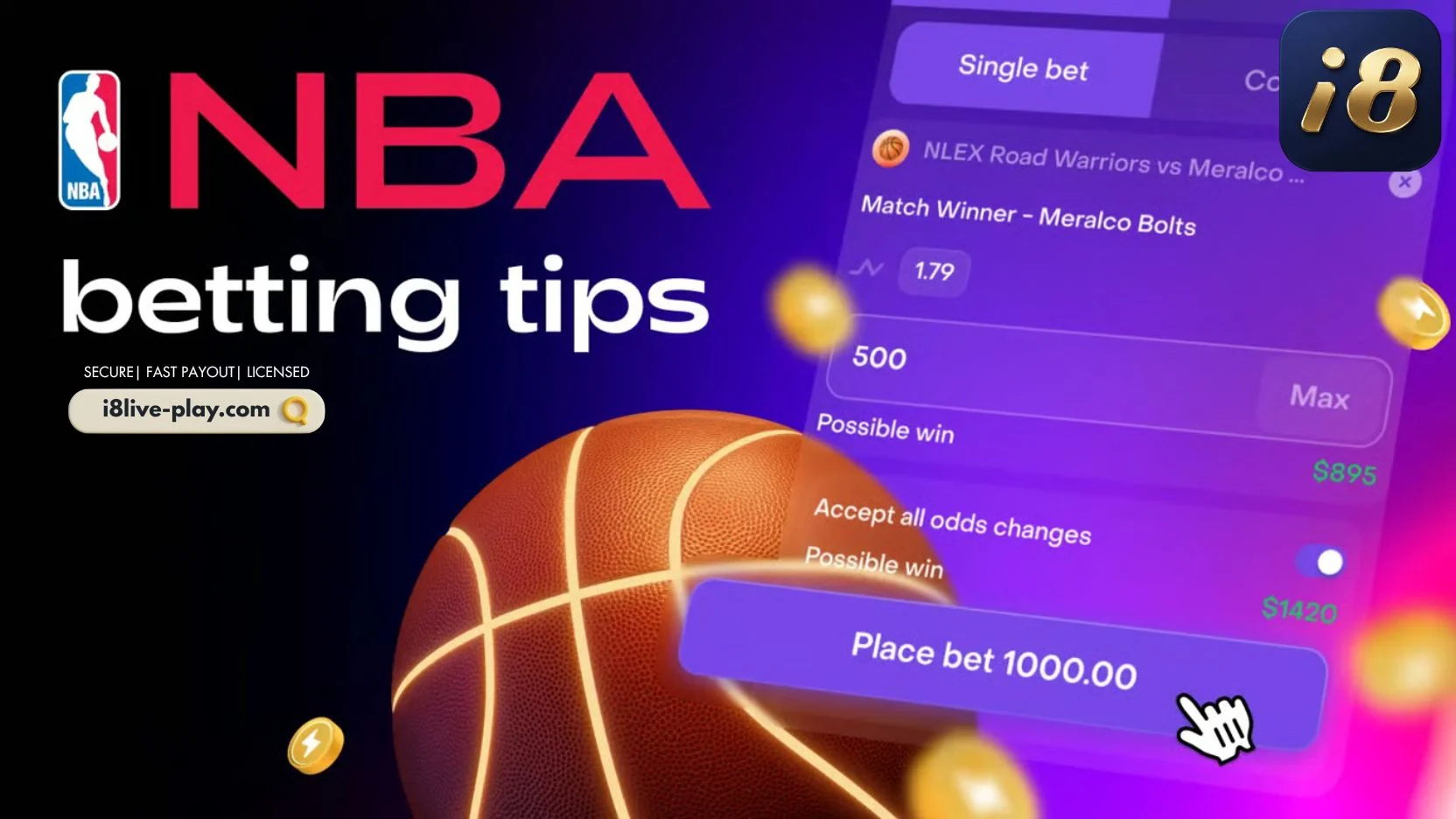
The illustrations below record the interface and promotional material at the original publication date. They do not confirm current offers or account conditions. Links or QR codes inside these historical images may be outdated; use the regional links on this site for current entry points.

Sources & further reading
- Comparing Sportsbooks: How to Check Markets, Lines and Interfaces Fairly
- i8 Live account
- full sportsbook
- i8 Live
- responsible gambling
- Football Betting Explained: Odds, Markets and How Bets Are Settled
- Esports Betting Explained: Match Formats, Markets and Why Context Matters
- NBA · Official scoring and timing rules