 EN
Live Sic Bo Explained: Three Dice, 216 Outcomes and What Each Bet Covers
Updated

Three things to understand
- Three independent fair dice give 216 equally likely ordered outcomes, so standard Sic Bo probabilities can be calculated.
- Standard Big and Small bets lose on a triple. A 1:1 payout does not mean a 50% winning probability.
- Earlier results do not make any total due.
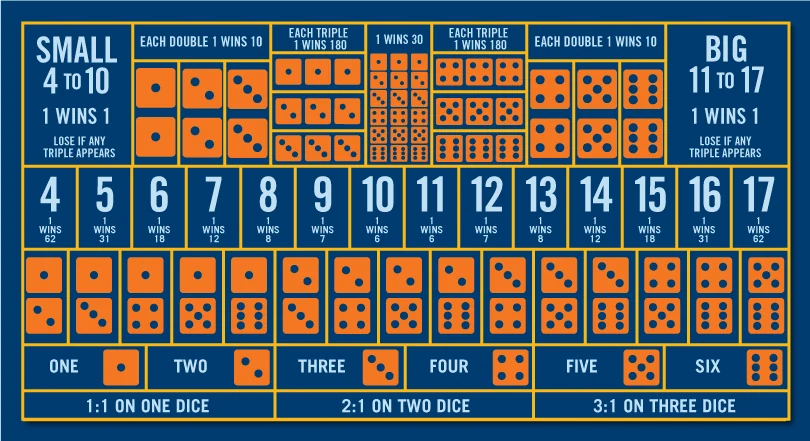
Sic Bo uses only three dice, so the number of outcomes is small enough to count exactly. This guide uses that count to explain how big and small, totals, single faces, doubles, triples and combinations differ, and why enhanced versions need their own rules.
How does a round run?
You place your chips during the betting period, the dice are shaken and revealed, and bets are settled. The table information explains which selections are available and how they are settled.
A result history shows completed rounds. It records what happened and does not influence what comes next.
How do big, small, odd and even work?
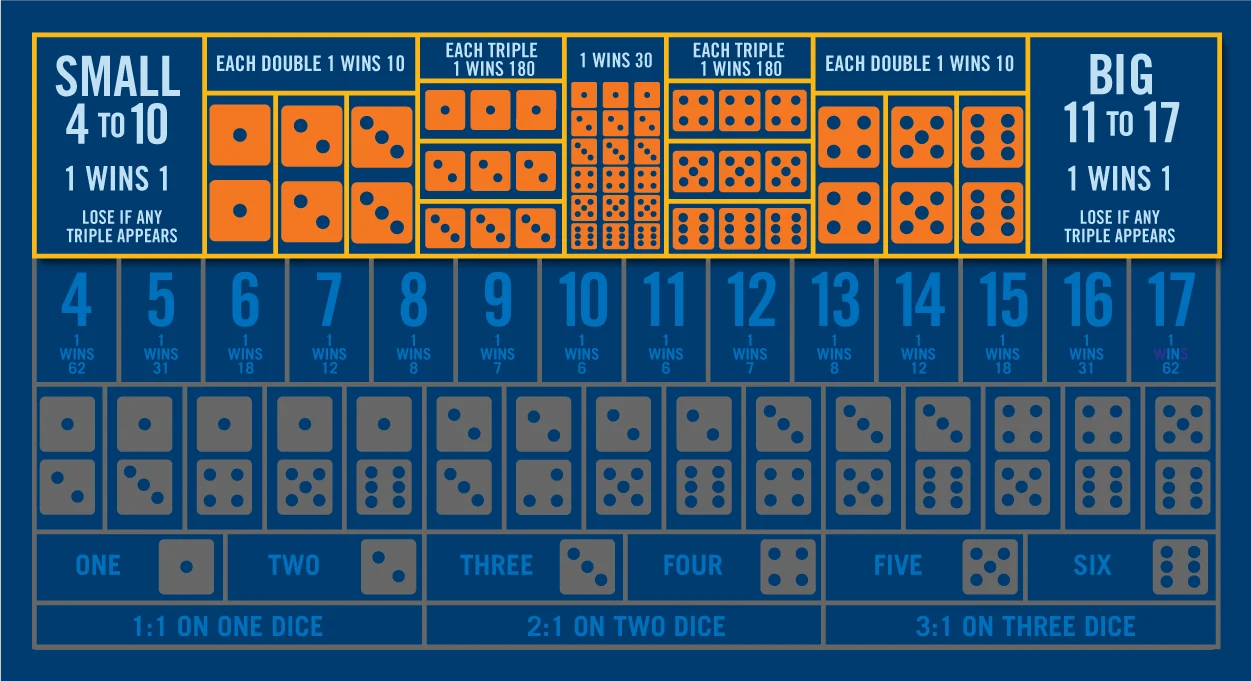
Small covers totals 4 to 10 and big covers totals 11 to 17, with both losing when the three dice show the same number (a triple). Of the 216 outcomes, 105 are non-triple totals of 11 to 17, so big wins about 48.6% of the time.
Odd and even similarly group totals, and many tables also exclude triples. Read the exclusions in the help panel before treating them as a simple choice between two sides.
What do totals and repeated faces cover?
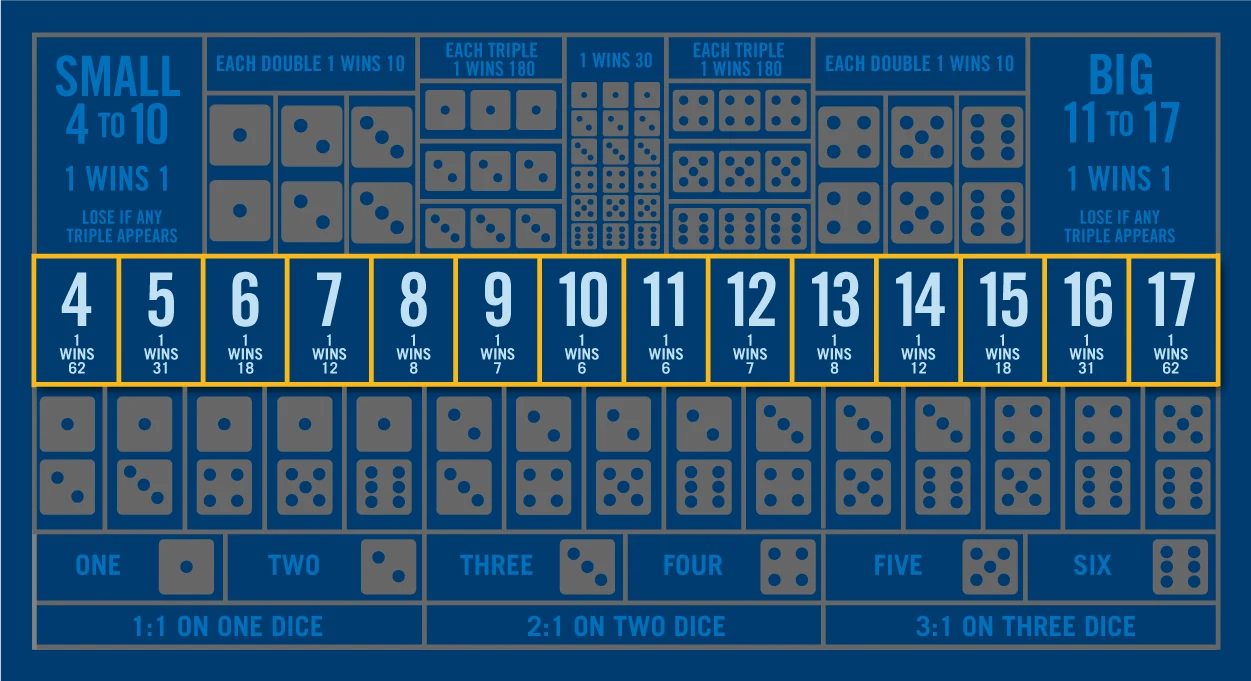
A specific-total bet wins if the three dice sum to that number. Totals near the middle, such as 10 and 11, occur more often than extremes such as 4 or 17, so their payouts differ.
Single-face bets win when a chosen number appears on at least one die, with larger payouts for two or three appearances. A double requires two dice with the same number, and a triple requires all three.
What are triples and combination bets?
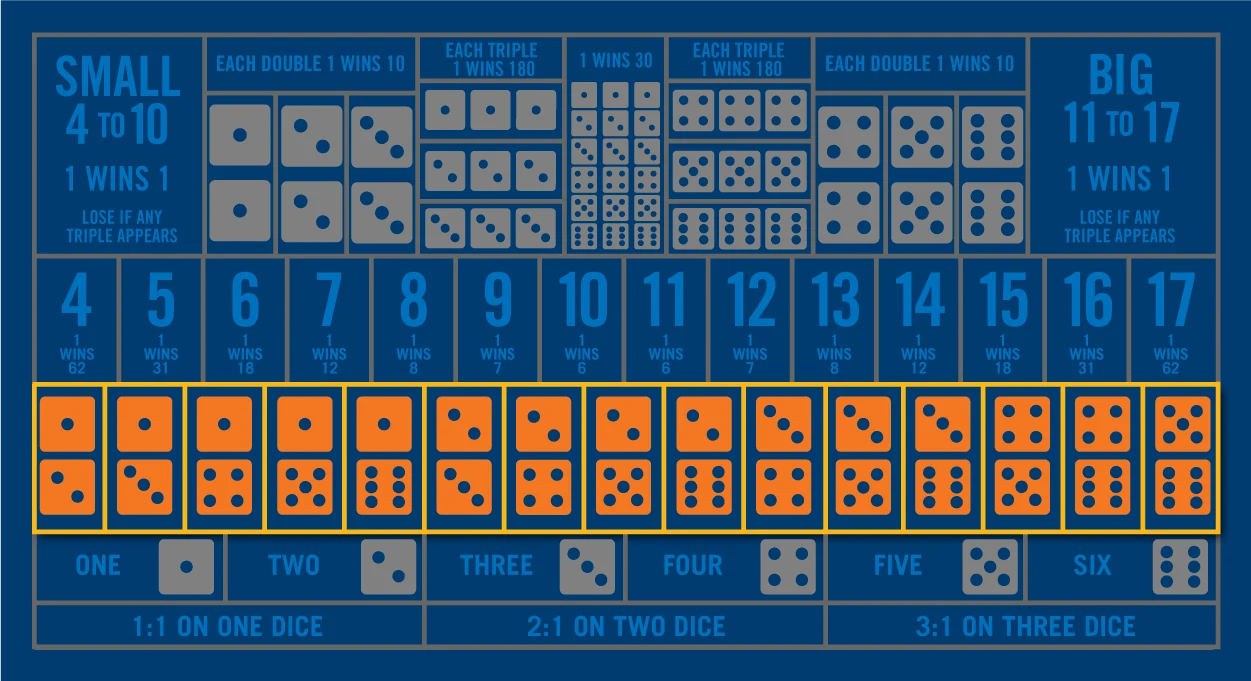
A specific triple, such as three sixes, occurs in 1 of 216 outcomes. An any-triple bet covers all six triples, so it happens 6 in 216 times, about 2.8%. Combination bets cover two chosen faces and win if both appear.
Wider coverage pays less, and narrower coverage pays more. One payout should not be generalised to the whole layout.
How do enhanced versions differ?
Evolution's Super Sic Bo and Pragmatic Play's Mega Sic Bo add multiplier features and different payout arrangements. Read the help panel of the selected version to see how they change the base game.
They are not interchangeable with every standard table, and a payout chart for one cannot be reused.
Why is history not a forecast?
The dice have no memory, so a total that has not appeared for many rounds is not due. Increasing your stakes after a loss changes your exposure, not the rules of the dice.
Keep a fixed limit, understand each selection before you place a chip, and use the live casino category to find the table.
Why totals near the middle are common
With three dice there are 216 outcomes. A total of 10 can be made 27 ways, while a total of 4 can be made only 3 ways. So a total of 10 occurs in 12.5% of rounds, while a total of 4 occurs in about 1.4%.
Payouts reflect that spread, with rarer totals paying more. The same logic applies across the whole layout: higher payouts mean rarer events.
Questions worth asking
What is the probability of rolling a triple?
Any triple occurs in 6 of 216 outcomes, about 2.8%, and a specific triple in 1 of 216.
Why does big not win half the time?
Because big loses on triples. Of the 216 outcomes, 105 are winning big totals, about 48.6%.
Are dice results in a live game random?
Each provider runs its own dice process under its own controls. The help panel and provider information describe how results are produced.
Original reference images
The illustrations below record the interface and promotional material at the original publication date. They do not confirm current offers or account conditions. Links or QR codes inside these historical images may be outdated; use the regional links on this site for current entry points.